A Late-Autumn Day Out, Planned Around Short Light
Plan a late-autumn day out around changing weather, visible route cues and a clear turn-back point, so you can enjoy the path without hurrying home.
How do you make a late-autumn day out feel worthwhile when clouds, wet ground or fading light might change the route? Plan around the path’s conditions and the decisions you may need to make along it. A familiar riverside track or woodland edge can be a fine destination, provided you know what would make you turn back.
Which path suits a changeable day?
Choose a route for its surface, shelter and visibility, not just for the view at its far end. A surfaced path near a village may remain comfortable in drizzle, while an exposed ridge or a leaf-covered slope can become harder to read underfoot. Check local access notices and route descriptions before leaving, especially if recent rain could affect a crossing or low-lying section.
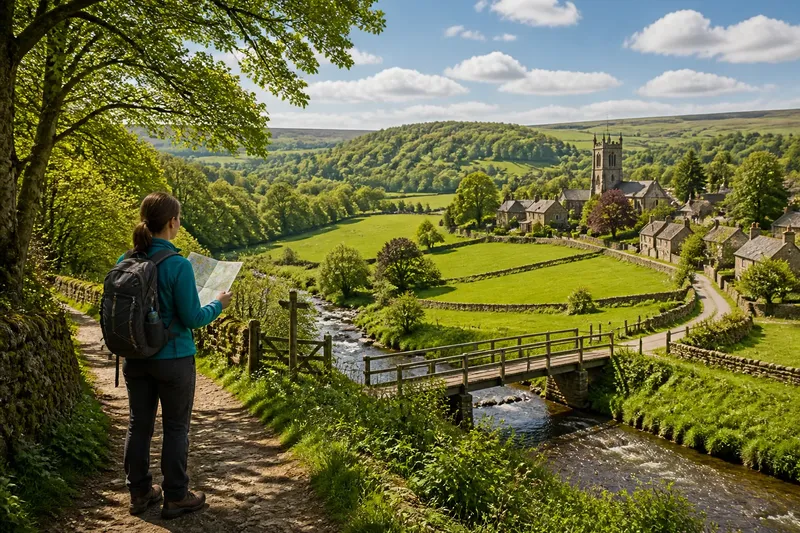
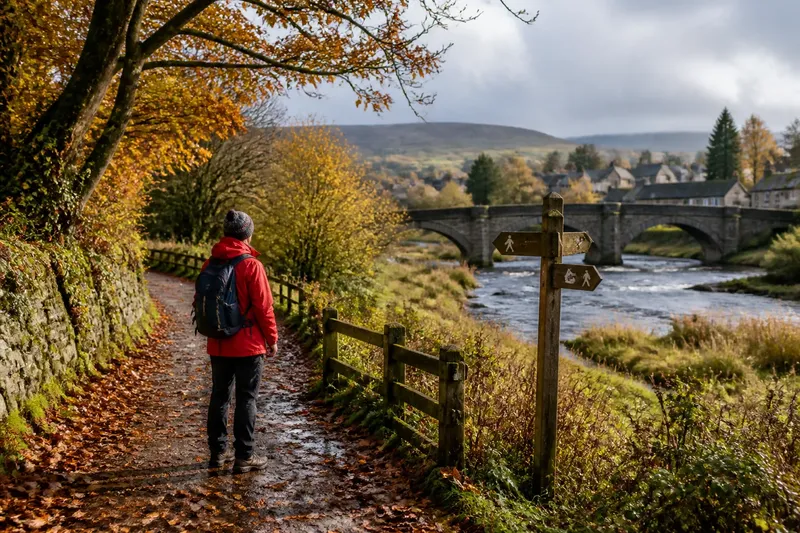
Look for landmarks that are easy to recognise on the ground: a bridge, a signpost, a junction or the edge of a wood. These give you useful reference points if mist or dim light makes the landscape less familiar. Save a map for offline use if you rely on your phone, and carry a paper map if that suits the route.
How can weather shape your choices?
Check the forecast for the destination rather than relying only on conditions at home. Rain, wind and low cloud affect routes differently: a sheltered lane may still be pleasant, while an open path can feel exposed. If a route depends on a viewpoint or a narrow crossing, choose another option when visibility or ground conditions make that feature unsuitable.
Wear footwear with grip appropriate to the path and bring a waterproof outer layer and warm layers you can adjust. Keep water and a snack accessible, along with a charged phone. For route-specific access or safety advice, follow local notices and guidance from relevant authorities.
Think of a route plan like a torch: it is most useful when it helps you notice what is immediately ahead, rather than asking you to keep marching towards a distant point. Watch for slippery leaves, standing water, damaged signs or a sudden change in visibility, then make the next decision from what you can actually see.
What should you check before setting off?
- Forecast: Check for rain, wind and poor visibility at the destination; if conditions make the chosen path uncomfortable, select a sheltered alternative or postpone.
- Access: Read local notices for closures or diversions; if the route is closed, use another public path rather than trying to bypass the restriction.
- Surface: Consider whether the route includes mud, steep ground or a stream crossing; if those features may be difficult in wet weather, choose a firmer route.
- Landmarks: Identify a bridge, junction or signpost you can recognise; if the route lacks clear cues in poor visibility, choose a more familiar path.
- Clothing: Match footwear and layers to the surface and forecast; if your kit is not suitable for wet or cold conditions, shorten the outing or change destination.
- Map and phone: Save the route offline and check that your phone is charged; if you cannot access reliable navigation, take a paper map or stay on a familiar, clearly marked path.
- Return option: Check the way back to your starting point and any transport timetable; if the return depends on a service you could miss, identify another way back or choose a nearer route.
How do you decide when to turn back?
Set a clear turn-back point before you start, such as the bridge beyond the woodland entrance or the next marked junction. Turn earlier if the route becomes slippery, visibility drops, or you feel colder or more tired than expected. A planned endpoint is useful, but it should not overrule what the path is telling you.
Say you are planning an invented afternoon walk from a village car park to a riverside bridge and back. You check the forecast, find a local notice that the riverside section is open, and save the route on your phone; before leaving, you decide the bridge is the furthest point, but only if the path remains clear and comfortable. On arrival, you see that rain has left the lower track muddy and the bridge approach is hard to distinguish, so you follow the clearly marked higher path instead and turn back at its signposted junction. The observable result is that you finish on a route you can identify, without needing to cross the uncertain section.
What do walkers often ask about late-autumn routes?
Is a woodland path always a good choice in rain?
No. Trees can shelter you from wind, but wet leaves may hide uneven or slippery ground. Check the route description and choose a surfaced or familiar path if footing is uncertain.
Should I rely on my phone for navigation?
A phone map can help, but signal and battery may be unreliable in rural places. Save the map offline before leaving and carry a suitable alternative if losing access would leave you unsure of the route.
What should I do if mist appears?
Stop somewhere safe and use visible landmarks or your map to confirm your position. If you cannot confidently identify the route ahead, retrace a known section or turn back rather than continuing towards an uncertain feature.
Is it sensible to change the route after arriving?
Yes, if the alternative is a public route that you can identify and manage in the conditions. Check signs and access notices, then choose the option that keeps the return straightforward.
How can the outing still feel complete?
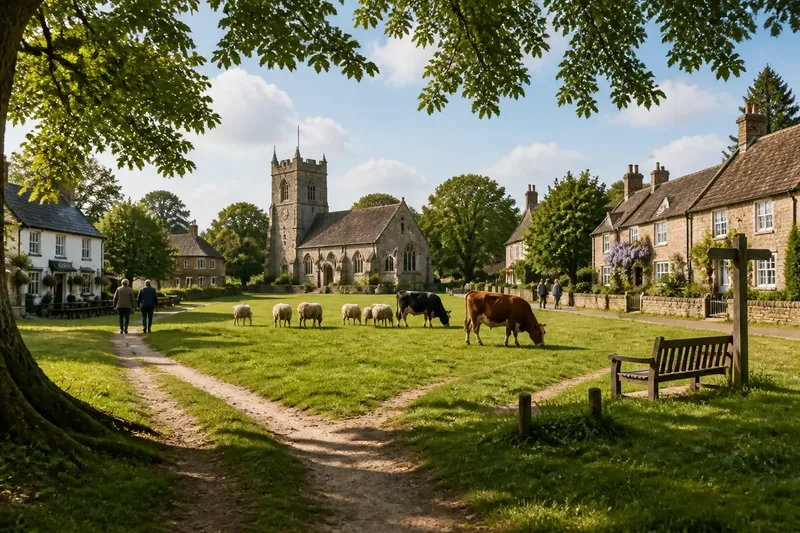
Give your attention to what the chosen path offers now: the sound of water under a bridge, a break in the trees or the colour of leaves along a lane. You do not need to reach a distant viewpoint for the walk to have a clear purpose. A warm drink after returning to the village can be a pleasant pause, not another destination to squeeze into the route.
For a late-autumn day out, keep the weather and the path in charge of the route. Check access, notice how conditions change underfoot and use landmarks to make each decision. That approach leaves room to enjoy the walk while keeping a clear, practical way back.